
A Private Milestone, a Public Stage: What Trump’s White House Engagement Announcement Signals
By Brian Allen

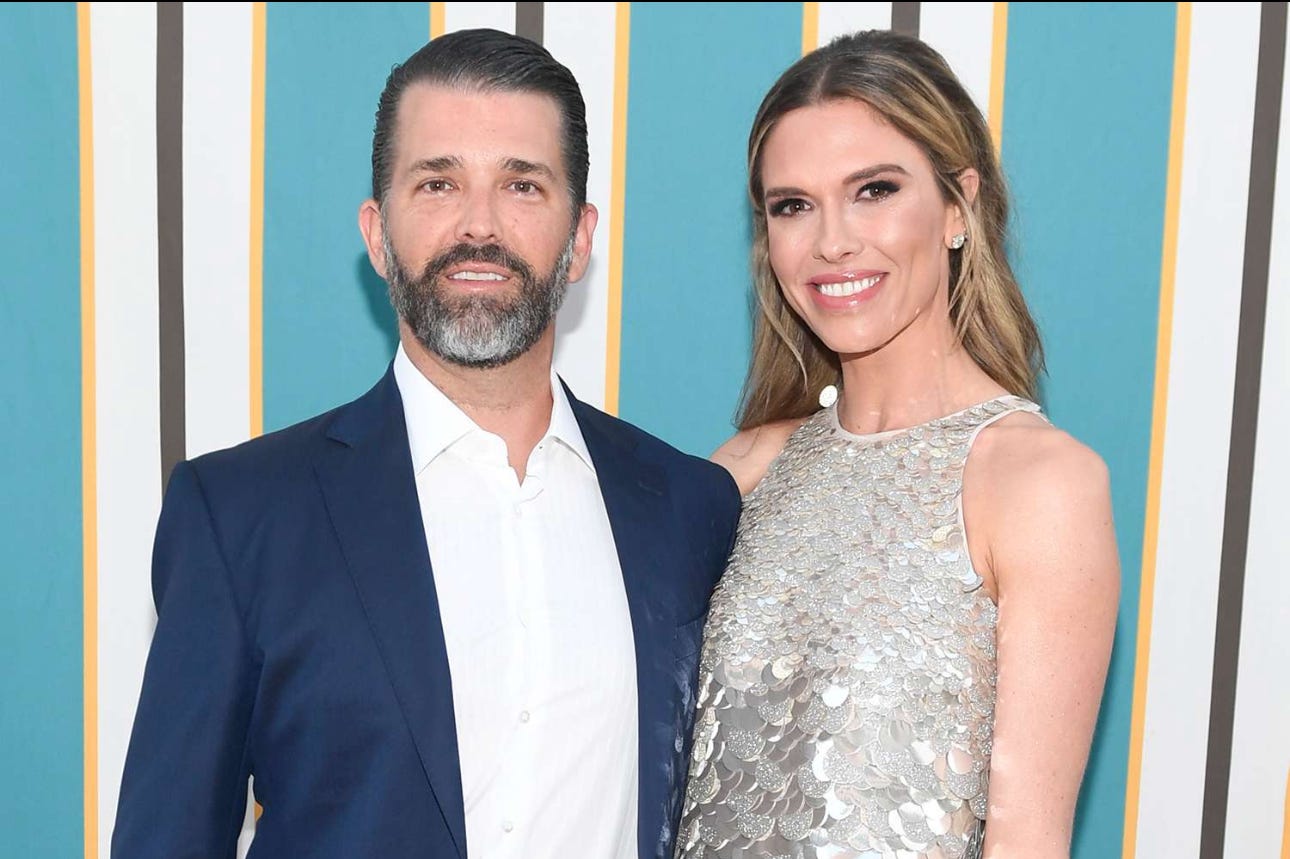
Early Tuesday morning, President Donald Trump announced from the White House that his son, Donald Trump Jr., and Bettina Anderson are engaged and planning to marry. The announcement was made during an official White House appearance, complete with a podium and presidential seal, and was later circulated widely on social media.
On its face, the event is personal and celebratory. In context, it raises a different question: what does it mean when a private family milestone is formally presented through the institutional machinery of the presidency?
What happened
According to video and public statements, President Trump used a White House setting to publicly announce his son’s engagement. The announcement was not released as a private family statement or campaign communication, but delivered from the seat of executive power itself.
There was no accompanying policy announcement, national address, or ceremonial state function tied to the moment. The setting was the message.
Why the venue matters
The White House is not simply a backdrop. It is a symbol of public authority, maintained by taxpayer funds, and traditionally reserved for matters of governance, diplomacy, or nationally recognized ceremonies.
Past presidents have taken pains to distinguish between:
Official acts of state
Campaign or political events
Private family matters
While lines have blurred at times across administrations, this announcement is notable for its lack of ambiguity. A personal family engagement was elevated to the level of an official presidential communication.
That choice invites scrutiny, not because of the engagement itself, but because of what it says about how public office is being used.
A pattern, not an anomaly
This moment fits a broader pattern in Trump-era governance where:
Family members occupy prominent, visible roles
The symbolism of state power is used to reinforce personal or brand narratives
Traditional distinctions between public office and private interest are treated as optional
None of this is illegal on its face. But legality is not the only standard by which democratic institutions function. Norms exist to protect the idea that the presidency serves the public, not a family.
When those norms erode, they do not disappear in isolation. They reset expectations.
Public reaction and political context
The announcement landed amid ongoing debates about executive overreach, accountability, and the personalization of government power. Against that backdrop, the image of a White House engagement announcement reads less like a celebration and more like symbolism.
For supporters, it reinforces the Trump brand as dominant, familial, and unapologetic. For critics, it underscores concerns that the presidency is being treated as a personal platform rather than a civic trust.
Both interpretations can coexist. What cannot be ignored is the signal being sent.
Why this matters
Democratic institutions rely not only on laws, but on restraint. The power of the presidency is immense precisely because it is supposed to be impersonal, temporary, and accountable.
When personal milestones are announced from the nation’s most powerful office, it subtly shifts the frame. The White House becomes less a public institution and more a family stage.
Over time, those shifts accumulate.
Bottom line
Donald Trump Jr.’s engagement is a private matter. Announcing it from the White House was a public choice.
That choice reflects how this administration understands power, visibility, and the role of the presidency itself. It is not about a wedding. It is about what the office is being used to represent.
For a country already wrestling with blurred lines between personal authority and public responsibility, the symbolism matters.