
How the Brown University Shooting Was Investigated and What It Reveals About Modern Policing
By Brian Allen

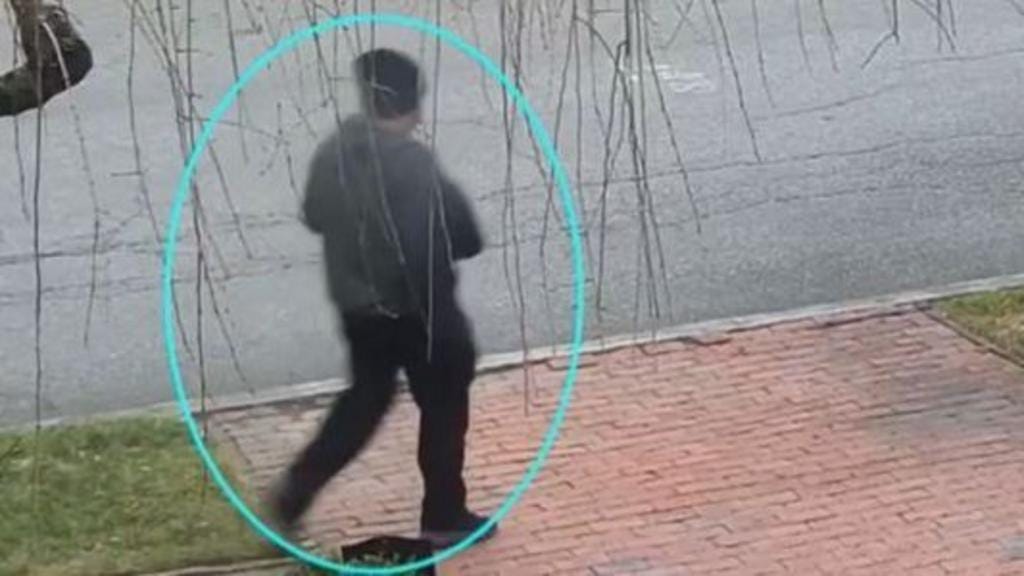
Authorities investigating the mass shooting at Brown University say the suspect was identified and tracked using a combination of witness accounts, vehicle information, and digital surveillance tools, including a privately operated Flock Safety license-plate camera system. The suspect was later found dead from a self-inflicted gunshot wound. Investigators have not established a motive, and key questions about the sequence of events remain unresolved.
The Brown University case illustrates how mass-casualty investigations are now assembled through layered data systems as much as traditional police work. While these tools can accelerate identification and containment, they also move critical decisions out of public view, raising questions about transparency, oversight, and what the public learns only after a case is effectively closed.

What happened at Brown University
In the early hours following reports of gunfire near Brown University, law enforcement agencies moved quickly to secure the campus and surrounding neighborhoods. According to police statements, multiple people were shot, including fatalities. The incident triggered a coordinated response involving campus police, local departments, and state authorities.
Officials emphasized early on that the situation was fluid. Students were instructed to shelter in place. Classes were canceled. The university issued a series of emergency alerts as officers worked to determine whether the shooter was still active and whether additional threats existed.
What became clear within the first day was that investigators believed the attack was not random in the sense of an ongoing spree. They quickly narrowed their focus to a single suspect who had fled the scene by vehicle. That determination shaped everything that followed.
At this stage, authorities have not publicly established a motive, ideological or otherwise. Law enforcement has been explicit that conclusions about intent remain premature.
Who the suspect was and what is actually known
According to law enforcement disclosures summarized in early reporting, the suspect was a former Brown University student. Police identified him by name after confirming his death and notifying next of kin. He was later found dead in another state, inside a storage facility, with firearms in his possession.
Authorities allege that:
The suspect left the Brown campus area shortly after the shooting.
He traveled across state lines.
He was located only after law enforcement pieced together vehicle information and surveillance data.
What authorities have not established:
A clear motive.
Whether the suspect acted alone in planning.
Whether the Brown shooting and a separate homicide under investigation are definitively linked beyond suspicion.
Those distinctions matter. Early coverage of mass shootings often fills gaps with conjecture. In this case, investigators have been unusually restrained in their public statements, repeatedly cautioning that conclusions will depend on forensic analysis and corroborated evidence.
How investigators tracked the suspect
The investigative breakthrough did not come from a manifesto, a social-media post, or a tip line. It came from data.
Police say they relied on:
Eyewitness accounts placing a specific vehicle near the scene.
Vehicle registration and rental records.
License-plate sightings captured by automated camera systems.
Cross-jurisdiction coordination among police departments.
Among those tools was a Flock Safety license-plate recognition system, a privately operated network increasingly used by local and state law enforcement agencies.
Authorities have not suggested that Flock Safety alone solved the case. Rather, it functioned as one element in a broader investigative mosaic. But its role is notable because it reflects how policing has changed, often without much public debate.
What Flock Safety is and what it is not
Flock Safety is a private technology company that provides automated license-plate recognition cameras to municipalities, police departments, universities, and even some homeowners’ associations. The cameras capture images of vehicles, including license plates, vehicle make, model, color, and distinguishing features.
Using AI-assisted pattern recognition, the system allows law enforcement to:
Search for vehicles matching certain criteria.
Track when and where a vehicle was seen.
Share alerts across participating jurisdictions.
This is not facial recognition. It does not identify drivers by name on its own. But it dramatically narrows the search space, often in minutes rather than days.
In the Brown case, police say the system helped confirm the suspect’s travel path after leaving campus. That information, combined with other evidence, led authorities to the location where the suspect was later found dead.
Why this matters, without overstating it
It is tempting to frame this as an “AI solves crime” moment. That would be inaccurate and misleading.
What actually happened is more subtle and more important: automated surveillance compressed the timeline of investigation. Decisions that once took days or weeks were made in hours. Jurisdictional boundaries mattered less. The suspect was identified before public speculation could spiral.
From a public-safety perspective, that is not trivial. Faster identification can:
Reduce the risk of follow-on violence.
Prevent misidentification.
Allow authorities to issue targeted alerts instead of broad lockdowns.
But speed has tradeoffs.
The transparency gap
When cases are solved through traditional investigative steps, interviews, warrants, arrests, the process becomes visible through court filings, hearings, and trials. Evidence is contested. Procedures are scrutinized.
In this case, the suspect died before any arrest or prosecution. That means:
No warrant challenges.
No evidentiary hearings.
No public testing of investigative methods.
The role of surveillance technology becomes known only through police statements after the fact. The public is asked to accept that the system worked, without seeing how decisions were made or what safeguards were applied.
That is not misconduct. It is a structural consequence of how modern policing operates.
How AI surveillance shifts accountability
License-plate readers have existed for years. What has changed is scale and integration.
Modern systems:
Operate continuously.
Aggregate data across jurisdictions.
Are often managed by private vendors rather than public agencies.
Retain data according to policies that vary widely by locality.
In many jurisdictions, no warrant is required to query license-plate databases. Courts have historically treated license plates as information exposed to public view. Whether that logic holds when thousands of cameras are networked together is an open legal question.
The Brown case does not answer that question. But it illustrates why it is no longer theoretical.
What this investigation does not show
It is important to be explicit about the limits of the case.
This investigation does not show:
That AI surveillance prevents mass shootings.
That such systems can identify motive or intent.
That automated tools replace human judgment.
That oversight concerns are hypothetical.
It also does not demonstrate abuse. There is no public indication that surveillance tools were misused, overextended, or deployed unlawfully in this case.
The significance lies in normalization, not excess.
The unresolved questions
Several questions remain unanswered and may never be fully resolved:
How long the suspect was under observation before being located.
What thresholds triggered inter-state data sharing.
How much discretion individual officers had in querying surveillance systems.
What data will be retained, and for how long.
Because the case ended with the suspect’s death, there may be no judicial forum in which those questions are examined.
Why this matters beyond Brown
Universities across the country are rapidly expanding surveillance partnerships in the name of safety. Cities are doing the same. The Brown case will almost certainly be cited by officials as evidence that such systems work.
They do, in a limited sense.
But the broader issue is not effectiveness alone. It is governance.
When investigations are assembled through automated tools that operate largely outside public view, democratic accountability relies almost entirely on trust. That trust is easier to maintain when outcomes are clear and uncontested. It is harder when mistakes occur.
The absence of a courtroom does not eliminate the need for standards.
The quiet shift in policing
The Brown University investigation reflects a larger transition already underway. Policing is moving from reactive, human-centered investigation toward preventive, data-assisted monitoring. That shift is happening faster than legal doctrine or public understanding.
This is not inherently dystopian. It is not inherently benign. It is simply a fact.
What matters is whether oversight evolves alongside capability.
Bottom line
The Brown University shooting was a tragedy. The investigation that followed was efficient, technologically sophisticated, and largely invisible to the public until it was over.
AI-assisted surveillance did not solve the case on its own. But it shaped how quickly and quietly law enforcement reached its conclusions.
As these systems become standard, the central question is not whether they work, but who watches the watchers when there is no trial, no cross-examination, and no public record beyond official assurance.
That question remains unanswered.