
Mark Kelly Calls the Bluff: Why the Pentagon’s Threats Don’t Add Up
By Brian Allen

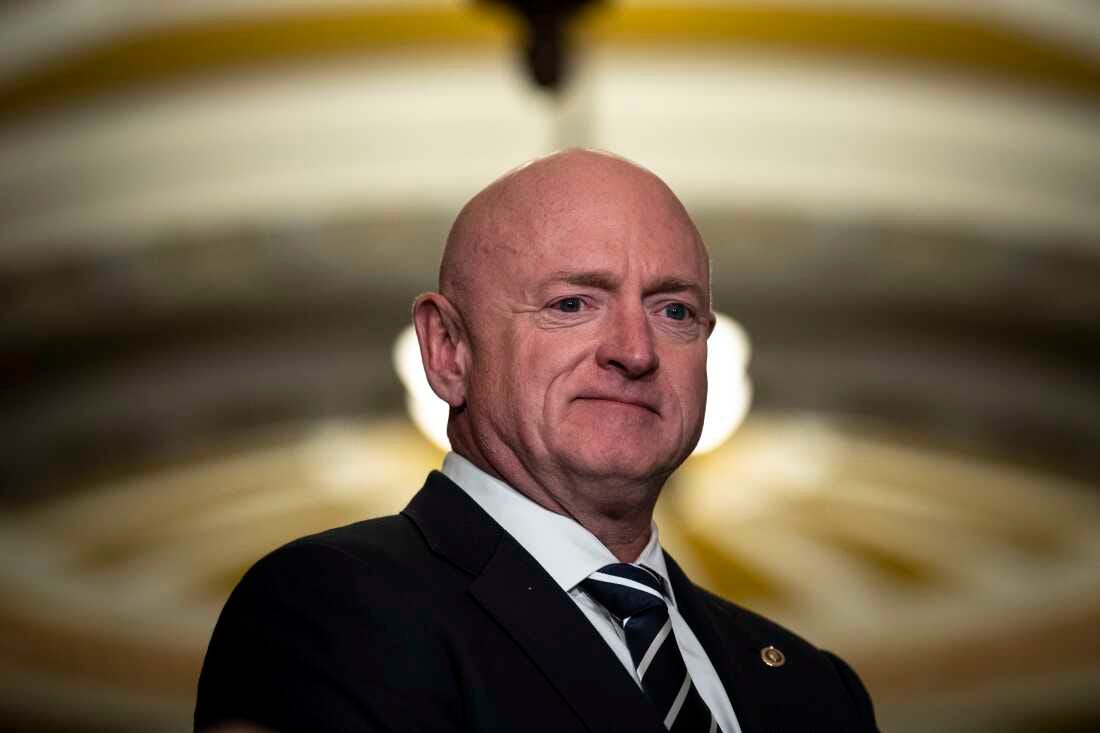
Senator Mark Kelly is pushing back publicly and forcefully against legal threats from Trump administration officials that he and his lawyers say are constitutionally baseless. The dispute centers on whether the Department of Defense can credibly claim authority over a retired Navy officer now serving as a sitting U.S. senator and what it means when senior officials float punitive action without formal notice.
Kelly’s response has been blunt. On CNN, he described the administration’s posture as “unserious,” arguing that the threats appear more performative than lawful .
What happened
The controversy stems from a video Kelly recorded alongside other former military Democrats. In the video, they reminded active-duty service members of a long-established principle of U.S. military law: service members are obligated to refuse unlawful orders.
Following the video’s release, Trump administration officials signaled they were reviewing Kelly’s actions. According to Punchbowl News, the Defense Department escalated that review into what it described as an “official command investigation,” raising the specter of recalling Kelly to active duty and potentially subjecting him to court-martial .
Kelly’s legal team responded by sending a warning letter to the Secretary of the Navy, stating they would pursue all legal avenues to stop what they called an “unconstitutional and extraordinary abuse of power,” including any attempt to recall Kelly for punitive purposes .
Kelly’s response
When pressed by CNN’s Anderson Cooper, Kelly said he had received no formal notification from the Pentagon at all.
“I haven’t heard anything. Still nothing,” Kelly said, adding that the only notice appeared to come via social media posts from political figures rather than official Defense Department channels .
Kelly also questioned the basic premise of the investigation. He retired from the Navy 14 years ago after a 25-year career and is not currently part of any military command structure.
“They call it a command investigation,” Kelly said. “I’m not in any command now. I don’t know what they’re talking about” .
The legal reality
At the center of the dispute is a fundamental question of authority. While retired service members can, in rare circumstances, be recalled to active duty, legal experts have long noted that using recall powers as retaliation against political speech would raise serious constitutional concerns.
Kelly’s attorneys argue that recalling a sitting U.S. senator for expressing views on lawful military conduct would violate the First Amendment and exceed statutory limits on military jurisdiction over retirees. The absence of formal notice further undercuts the credibility of the administration’s threats.
Even Kelly acknowledged that if any action were truly underway, he would expect official communication, not vague reports or online commentary. He noted he was scheduled to appear in a briefing with the Secretary of Defense the following day, suggesting that would be the appropriate venue for any legitimate discussion .
Why this matters
This episode is about more than a single video. It raises broader concerns about how executive power is wielded and signaled.
Floating legal threats without initiating formal process risks blurring the line between governance and intimidation. For service members, veterans, and lawmakers alike, the implication that political speech could trigger retroactive military discipline sets a troubling precedent.
It also highlights a recurring pattern in this administration: aggressive rhetoric that collapses under scrutiny when measured against institutional rules and constitutional limits.
Bottom line
Mark Kelly’s critique cuts to the heart of the issue. If the Pentagon believes it has legal grounds to act, the law provides clear procedures to do so. Thus far, those procedures appear absent.
In the absence of formal charges, notice, or jurisdictional clarity, the administration’s threats look less like enforcement of military discipline and more like political theater. Kelly’s refusal to be intimidated and his insistence on legal precision, underscores why those distinctions matter.