
Sabrina Carpenter vs. The White House: A Pop Star Just Drew the Line Trump Never Expected
Inside the cultural, legal, and political fallout after the administration used a pop hit to glorify ICE raids

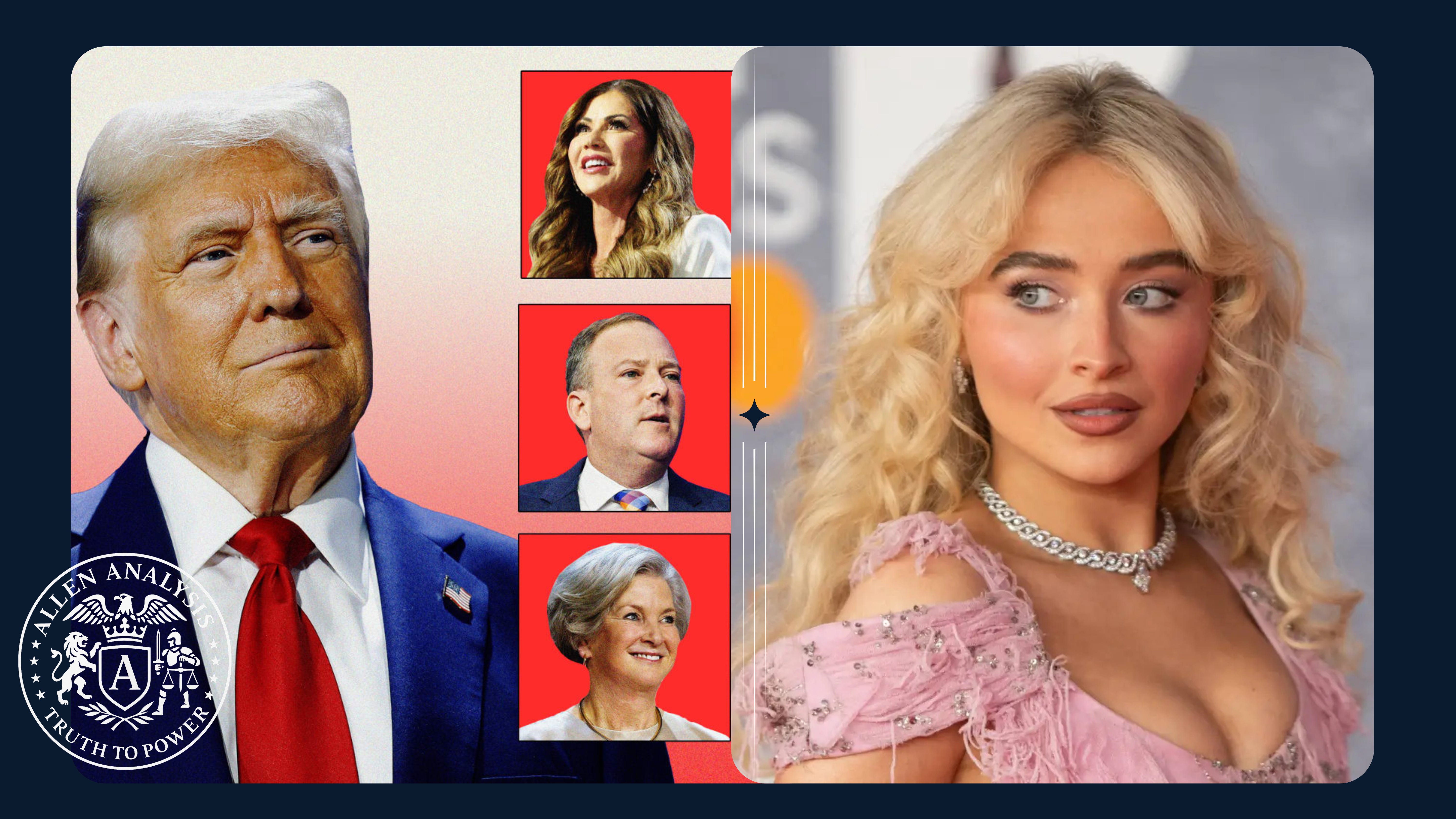
The Trump White House crossed a line this week that the entertainment industry has rarely seen an American administration attempt. It took a chart-topping pop song, spliced it into a government propaganda video showcasing armed ICE agents storming families at dawn, and blasted it across the largest social platforms in the country. The song was Sabrina Carpenter’s hit track “Juno.” The White House did not seek her permission.
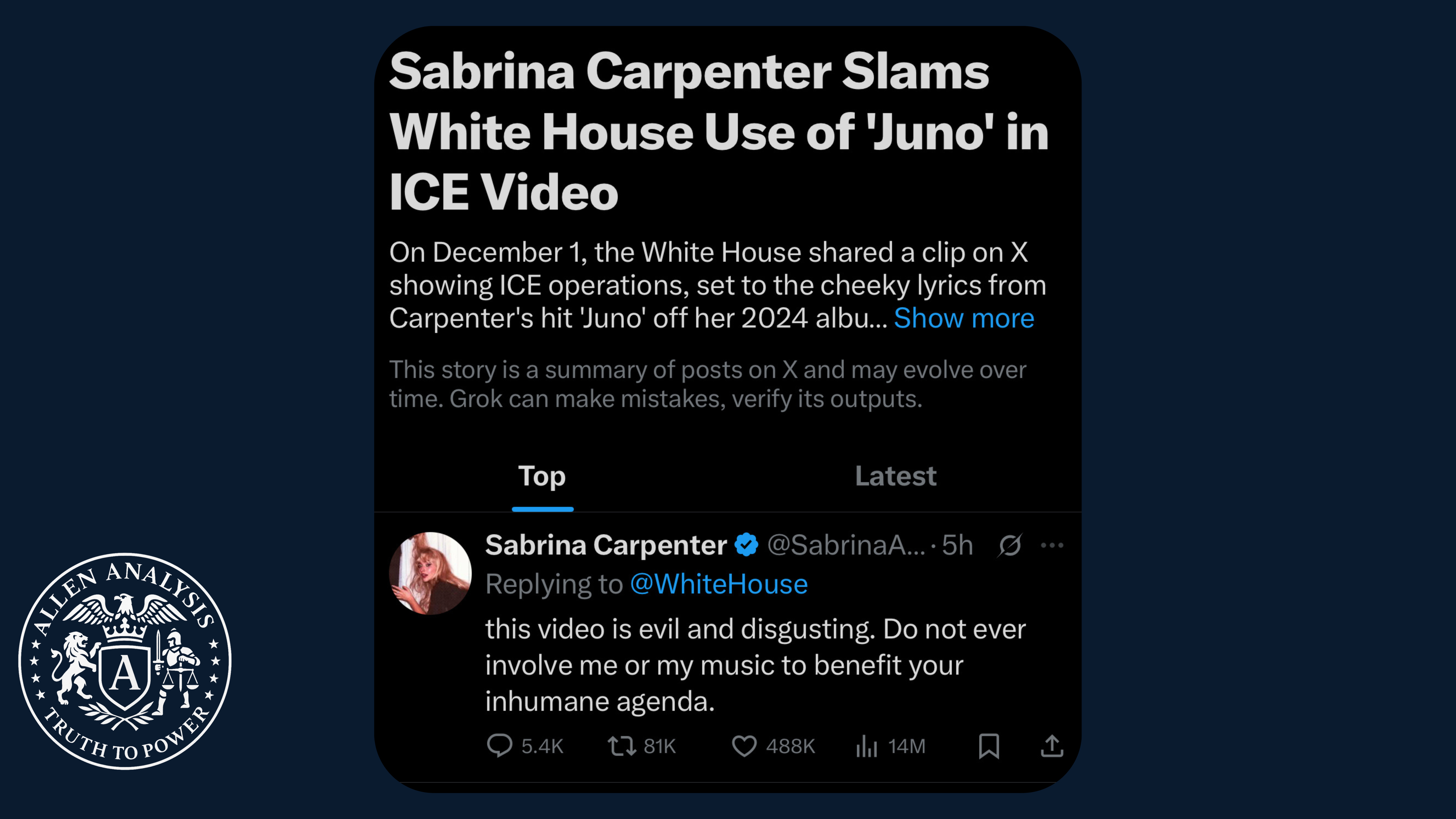
By nightfall, Sabrina Carpenter was not just trending. She detonated a political grenade right into Trump’s messaging machine.
Her public rebuke was swift, unmistakable, and loud enough to echo across every corner of the internet.
“This video is evil and disgusting. Do not ever involve me or my music to benefit your inhumane agenda.”
For an artist who usually avoids direct political warfare, this was a declaration of independence. And it created the kind of crisis the White House did not predict because they fundamentally misread the cultural moment they tried to weaponize.
This moment is bigger than a licensing dispute. It is a collision between political propaganda, celebrity power, and the ethics of government messaging. It is also a window into how desperate the administration has become to sanitize ICE’s most controversial operations.
Let’s break it down.
The White House ICE Video: A Miscalculation at Every Layer
On December 1, the White House posted a video montage of ICE raids that included scenes of heavily armed agents kicking down doors, detaining parents in front of their children, and zip-tying workers in warehouse sweeps. The visuals were dark, aggressive, and obviously curated to signal strength to Trump’s base.
Then came the soundtrack.
The video was edited to the melody and lyrics of Carpenter’s hit “Juno,” a song that has become a Gen Z anthem. The song is playful and upbeat. Pairing it with scenes of state violence created an immediate emotional dissonance. Instead of softening ICE’s image, the contrast made the brutality even starker.
White House aides claimed the use of the song fell under fair use guidelines for political messaging. Legal experts disagree.
Music licensing attorneys interviewed by Billboard and Variety were blunt. Federal agencies cannot commercially repurpose copyrighted music without clearance. Fair use does not apply to promotional government media. And political messaging in an official capacity is not exempt from licensing law.
The administration’s legal position looks weak. The ethical position looks worse.
Why Sabrina Carpenter’s Response Hit Like a Hammer
Carpenter is not simply a pop star. She is a global brand with an extremely loyal and extremely online audience. Her fanbase watched in real time as the White House attempted to hijack her music to soften the image of the most feared domestic enforcement agency in the country.
The post backfired instantly. The White House was ratioed by hundreds of thousands of replies. The video was buried by quote tweets calling it fascistic, tone-deaf, and horrifying. And Carpenter’s own public rejection became the focal point of the news cycle.
What she said matters. She did not call the video inappropriate. She called it inhumane.
This was not a celebrity offering a boilerplate “I do not consent.” This was a direct accusation that the administration’s ICE agenda is morally repugnant. She framed the video as propaganda. And she framed herself as unwilling to become a silent accessory to state violence.
Within hours, journalists, civil rights groups, and even musicians from outside her genre praised her stance.
The White House did not respond.
The Propaganda Playbook: What the Administration Was Trying to Do
Propagandists have always used music to soften the image of violence. The U.S. military used Top Gun soundtracks to sell recruitment. Political candidates use patriotic country music to frame themselves as trustworthy. Dictatorships historically pair state brutality with uplifting pop to create emotional confusion that encourages compliance.
What the Trump White House attempted mirrors those tactics.
The administration has spent months under fire for ICE raids that have displaced families, injured bystanders, and detained lawful residents whose only crime was living with undocumented relatives. The public is increasingly uncomfortable with videos showing agents dragging people out of their homes.
Instead of defending the substance, Trump’s team tried to repackage it. They tried to use pop culture as a Trojan horse.
And they chose the wrong target.
Carpenter is one of the most visible stars in the world right now. Her fans treat her word like a moral compass. She has more cultural influence than most political figures. When she condemned the government’s actions, she effectively reframed the national narrative.
This was not ICE flexing. This was ICE being exposed.
The Legal Fallout: The White House Is Vulnerable
The administration is now facing potential legal exposure on two fronts.
First, copyright. Music licensing lawyers say Carpenter’s label, Universal Music Group, has strong grounds to issue a DMCA takedown and pursue damages. Government agencies do not receive automatic music licenses. The White House cannot claim political fair use when the content is itself promotional and produced by a taxpayer-funded office.
Second, misappropriation. Carpenter’s statement suggests she may pursue a right-of-publicity claim. Courts have repeatedly ruled that government actors cannot use a private citizen’s intellectual property to imply endorsement of a political message.
The White House either ignored legal advice or was so desperate for a viral hit that they gambled the consequences.
Why This Moment Matters Politically
This is not about a song. It is about narrative control.
Trump has been trying to rehabilitate ICE as heroic after months of footage showing disturbing abuses. His administration is counting on fear-based messaging to justify escalations in deportation protocols.
But when a mainstream artist publicly refuses to be co-opted, it punctures the illusion that the White House speaks for America.
Gen Z has already been disgusted by images of ICE pointing guns at families and dragging people out in handcuffs. Carpenter’s response aligned her with the majority of young voters who reject state brutality disguised as national security performance.
This is cultural power. This is narrative power. And the White House failed to anticipate it.
The Broader Cultural Shift
When Taylor Swift confronted political manipulation, it reshaped national discourse. Sabrina Carpenter just did the same, but in a context where state violence is involved.
Artists today understand that government propaganda cannot stand unchallenged when their names are attached. They know their audiences depend on them to protect the integrity of their work.
Pop culture is no longer a passive backdrop to politics. It is an active battlefield.
References
Billboard. (2025). White House criticized for unlicensed use of Sabrina Carpenter’s “Juno” in ICE promotional video.
Variety. (2025). Music attorneys question legality of White House’s use of pop song in federal enforcement media.
Reuters. (2025). White House social media team under scrutiny following backlash to ICE video soundtrack.
Associated Press. (2025). Sabrina Carpenter denounces administration for using her music in immigration enforcement video.
American Civil Liberties Union. (2024). Patterns of abuse in ICE enforcement actions.
U.S. Copyright Office. (2023). Fair use misconceptions in political messaging.
WHAT TO READ:
Hegseth’s Escape Plan Begins. The White House Just Pointed the Finger at Admiral Bradley.

The Trump administration has entered the phase every scandal eventually reaches. The walls tighten. Investigators circle. Lawyers whisper. And someone gets positioned to take the fall.This Substack is reader-supported. To receive new posts and support my work, consider becoming a free or paid subscriber.

Turning Point USA Implodes: Staffer Accused of Sexual Harassment, Kidnapping, and Weaponizing Police Power

Turning Point USA (TPUSA), a national youth-focused conservative organization, is facing new scrutiny following allegations made against a staffer and Avondale Councilwoman Jeannette Garcia. The claims originate from a civil complaint filed by a male TPUSA employee, who alleges that Garcia engaged in sexual harassment and subsequently took his fourteen-…