The Allen Analysis Morning Brief
December 1, 2025 A global snapshot of power, surveillance, injustice, and the political fault lines shaping the world you wake up in.
India Just Installed a Government Backdoor on Every Phone
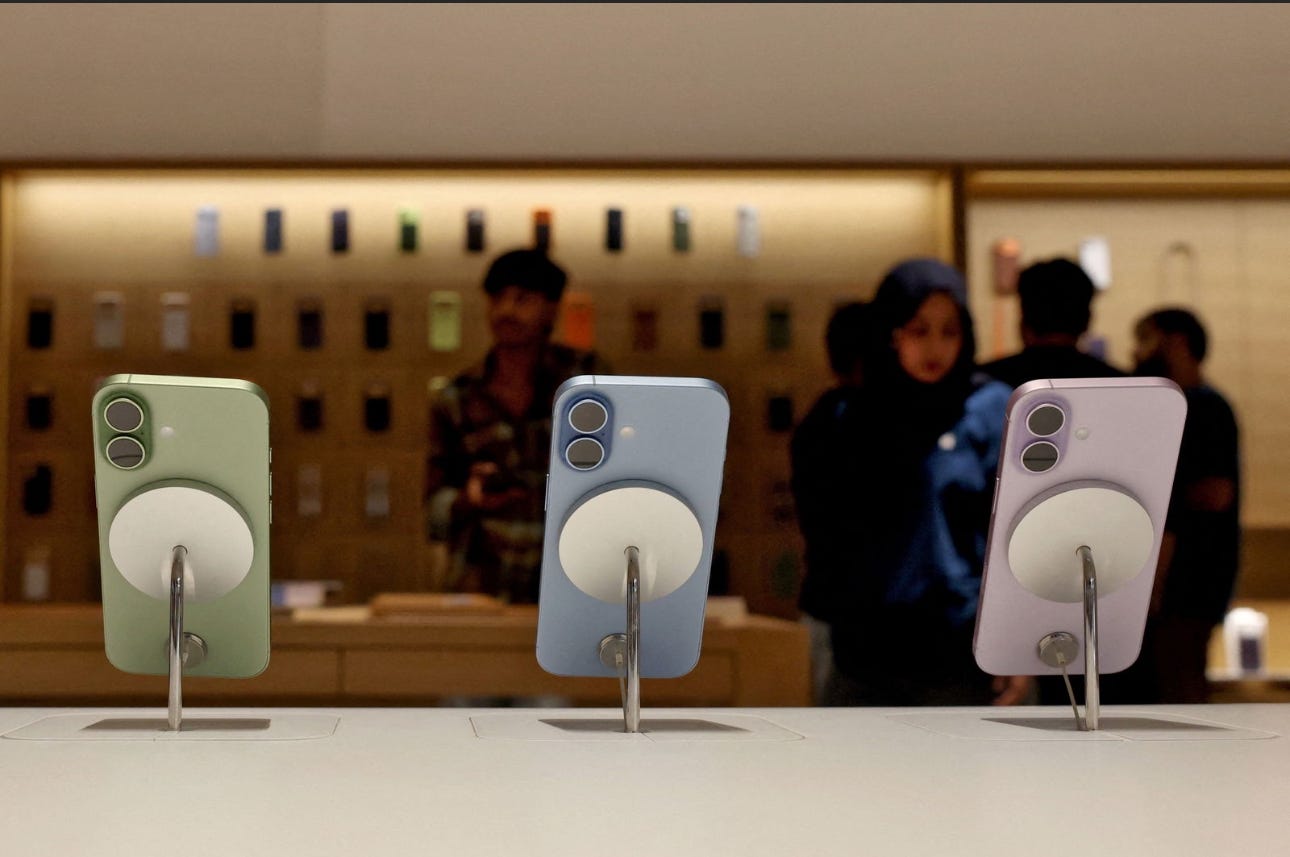
Let’s start in India, where the Modi government has quietly taken another step toward digital authoritarianism. A new telecom directive now forces every smartphone manufacturer to preinstall Sanchar Saathi, a government cybersecurity and tracking tool, on all devices sold in the country. Users cannot delete it. They cannot disable it. They cannot opt out (Press Trust of India, 2025).
Officials claim the app is meant to help citizens identify fraud, track stolen devices, and strengthen “digital safety.” Privacy researchers say that is a fantasy. The app already has a history of collecting metadata, device identifiers, and geolocation patterns linked to national identity numbers. It also plugs directly into India’s centralized surveillance architecture, including the Aadhaar ID system and the Crime and Criminal Tracking Network.
India has a population of 1.4 billion. With one directive, the government gained an indeletable presence inside almost every pocket in the country. This is not about fraud. It is about building a digital perimeter around an entire population and normalizing constant state presence on private devices.
As always, the playbook is simple. Promise safety. Deliver control.
Singapore Executes Three People in One Week
Singapore carried out three hangings within seven days, marking its fastest execution pace in over twenty years and drawing sharp criticism from global human rights monitors (Reuters, 2025). All three individuals were convicted on drug charges. None was accused of violent crimes.
Singapore’s leaders insist harsh penalties are necessary for stability. Critics argue the country has become a laboratory for state violence disguised as “public order.” Drug offenses in Singapore can trigger automatic death sentences, even when defendants were couriers or economically exploited migrants.
These three executions happened while a major court challenge to mandatory death sentencing is pending. Singapore rushed anyway. Killing people before the law has a chance to question the killing.
The global community barely blinked. It was another reminder that when a government decides some lives are disposable, it rarely stops at three.
Scientists Discover Chernobyl Fungus That Could Shield Astronauts From Radiation
A surprising bright spot in today’s news comes from the scarred ruins of Chernobyl. Scientists studying the site’s melanin-rich black fungi discovered that the organisms can significantly reduce radiation levels in their immediate environment (National Research Council of Ukraine, 2024).
Yes, the same fungi that survived in the walls of the exploded reactor may help humans survive on Mars.
NASA and international partners have been experimenting with fungal shielding on the International Space Station since 2022, and the results were striking. Researchers observed measurable drops in radiation exposure when material grown from these Chernobyl organisms was placed around sensors.
If fully developed, astronauts could use self-replicating fungal structures as living radiation barriers. It would mean fewer heavy payloads launched from Earth and safer long-term missions on the Moon and Mars.
Humanity’s path to the stars may depend on one of the strangest survivors on Earth.
African Union Takes Historic Step Toward Colonial Reparations
At a major summit in Algiers, the African Union formally advanced a multinational framework to demand economic and cultural reparations for centuries of colonial extraction (African Union Commission, 2025). Ministers, legal scholars, economists, and historians laid out models for restitution that include the return of stolen artifacts and long-term financial compensation.
The price tag that AU economists floated was staggering. Their early estimate puts the value of extracted resources, forced labor, and stolen cultural property at trillions of dollars.
European governments responded with the usual inertia. They said the issue is “complex” and requires “dialogue.” Translation: they are hoping this momentum fades like every other push for accountability since independence movements of the 1950s.
This time feels different. Africa’s legal class is younger, globally networked, and more aggressive. And unlike past generations, many have studied how high-value suits were successfully argued against corporations and governments in other contexts, from environmental claims to genocide reparations.
The AU is not lobbying anymore. It is building a case.
The White House Creates an Official “Media Bias Tracker” Website
In Washington, the Trump administration launched a searchable federal website that ranks media organizations and individual reporters for “misleading coverage.” The site includes a leaderboard of “repeat offenders” (Associated Press, 2025).
Democratic lawmakers immediately condemned it as a government blacklist targeting political critics. Press freedom groups called it a dangerous escalation and warned that authoritarian governments around the world use similar tools as precursors to censorship, police targeting, or punitive regulation.
The site’s launch page featured clips of Democratic representatives, selectively edited to imply wrongdoing that never occurred. Fact-checkers already found errors in four out of the first seven entries posted.
This is not just an attack on the press. It is an attempt to replace journalism with state-approved narrative enforcement. A government that labels its critics as “dangerous” is preparing the public to treat them as enemies.
Trump’s AI and Crypto Czar Faces Massive Conflict of Interest Probe
Another West Wing crisis. David Sacks, Trump’s top adviser on artificial intelligence and cryptocurrency, is facing escalating conflict-of-interest scrutiny after ethics disclosures revealed he holds stakes in 449 different AI companies (Financial Times, 2025).
Newly uncovered waivers allow him to sell or restructure these assets without disclosing timelines or valuations. Watchdogs say this essentially creates a private shadow market inside the White House, where Sacks can influence regulations while holding massive positions that benefit from those regulations.
Several senators have publicly asked whether the AI Czar is running federal policy or running a portfolio.
This is happening at the exact moment the administration is pushing to centralize AI regulation under federal executive control. If that succeeds, one of the most consequential technologies of the century would be overseen by an official financially entangled with nearly every major sector of that same industry.
All roads lead to the same question. Whose interests are being protected here? Because it is not the public’s.
Closing Thought
Today’s global picture tells a single story. Governments are expanding surveillance. Democracies are eroding. Authoritarian practices are spreading under the banner of “security.” And the United States, under Trump, is normalizing conflicts of interest and propaganda tools that used to be unthinkable.
Every headline is another reminder. Power never gives itself boundaries. It waits for citizens to draw them.
References
African Union Commission. (2025). AU legal summit on restitution and reparations. Addis Ababa: AUC Publications.
Associated Press. (2025). White House launches federal media bias tracker. AP News. https://apnews.com
Financial Times. (2025). Trump AI adviser faces ethics scrutiny over undisclosed holdings. FT News. https://ft.com
National Research Council of Ukraine. (2024). Radiation-resistant fungi studies and ISS experimental results. Kyiv: NRCU.
Press Trust of India. (2025). Government mandates Sanchar Saathi app on all devices. PTI News. https://www.ptinews.com
Reuters. (2025). Singapore executes three prisoners amid global criticism. Reuters News. https://reuters.com
WHAT TO READ:
Costco vs. Trump: The First Cracks in a $205 Billion Tariff Empire
On December 1, 2025, Costco Wholesale filed a lawsuit that could blow a hole straight through Donald Trump’s signature trade agenda. The company asked the U.S. Court of International Trade to declare that the White House never had lawful authority to impose the tariffs that have drained nearly $90 billion from importers and more than $205 billion from t…
The White House Just Threw Admiral Frank M. Bradley Under the Bus
This Substack is reader-supported. To receive new posts and support my work, consider becoming a free or paid subscriber.