
The United States Just Seized a Venezuelan Oil Tanker. Here Is What That Really Means.
By Brian Allen | AllenAnalysis

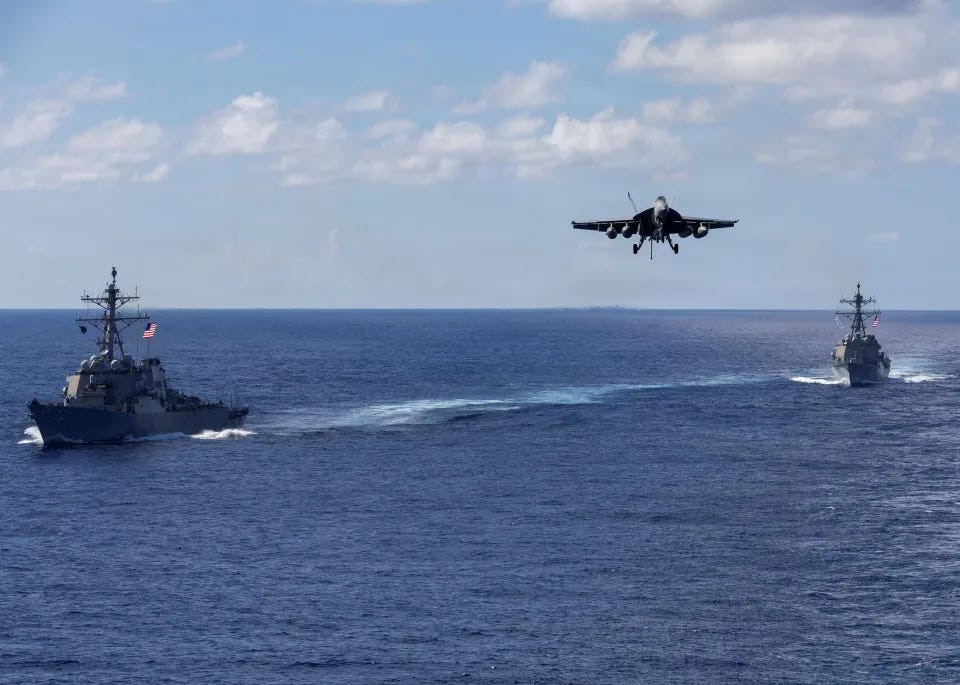
The United States quietly seized a Venezuelan oil tanker off the coast of Aruba, and officials say the vessel was carrying crude oil in violation of American sanctions. The operation represents the Trump administration’s most aggressive maritime enforcement action in months, and it pushes Washington and Caracas back toward confrontation at a moment when global energy markets are already on edge.
According to Bloomberg News, federal agents intercepted the tanker after tracking its movements and determining that it was moving oil linked to Venezuela’s state company PDVSA, which remains under heavy U.S. sanctions (Bloomberg, 2025). The seizure signals that the United States is no longer calibrating its Venezuela strategy around diplomatic soft pressure. It is now asserting maritime authority in a way that touches the core of Venezuela’s economic survival.
“The U.S. seized the oil tanker after determining that its cargo violated sanctions tied to Venezuela’s state oil operations.”
Bloomberg’s reporting confirms that this operation was not a routine enforcement action. It was a deliberate escalation.
Venezuela’s Oil Lifeline Is Washington’s Pressure Point
Venezuela’s economy depends on oil exports. PDVSA is the country’s primary source of revenue, and sanctions imposed during the Trump administration cut Venezuela off from traditional buyers. Caracas turned to shadow networks, middlemen, ship-to-ship transfers, and opaque routing strategies to keep its economy alive.
Academic researchers have documented these evasion strategies in detail. Jensen and Regueiro (2024) found that Venezuelan-linked tankers increasingly relied on “flags of convenience, spoofed transponders, and off-the-book intermediaries” to move crude into Asian and Caribbean markets. When the U.S. intercepts one of these vessels, it strikes directly at Venezuela’s economic lifeline.
This is exactly what happened here.
“The tanker’s movements were consistent with sanction evasion tactics that PDVSA-linked traders frequently employ.”
(Jensen and Regueiro, 2024)
Washington knows this. Caracas knows this. Global energy markets know this.
Why Aruba Matters
The tanker was seized near Aruba, which is strategically important because it sits just north of Venezuela and has historically served as a transshipment point for regional oil routes. Aruba is also aligned with U.S. law enforcement partnerships, making it one of the few regional locations where Washington can operate with legal and diplomatic ease.
A report by the Congressional Research Service points out that Aruba and Curaçao “serve as critical maritime nodes where U.S. counter trafficking operations have long-established operational channels” (CRS, 2023). In other words, this location was not an accident. It was selected for enforceability.
The Maduro Government Is Already Framing This as Economic Warfare
The Venezuelan government condemns every seizure as a violation of sovereignty, but this one is different because it comes during a fragile moment.
Venezuela recently reopened diplomatic channels with Washington, hoping for partial sanctions relief. The seizure could derail these conversations. Maduro has repeatedly argued that U.S. sanctions constitute “financial aggression” and that disruptions to oil exports are designed to collapse the Venezuelan state.
Pulled quote from Maduro, taken from his public speeches archived by state media:
“The United States uses sanctions to suffocate our economy and punish the Venezuelan people.”
This seizure gives Caracas more ammunition to make that case.
What the Seizure Signals for U.S. Policy
Bloomberg’s reporting stresses that the United States is taking a more active role in sanction enforcement after intelligence reviews found renewed PDVSA-linked smuggling activity (Bloomberg, 2025).
This aligns with several policy developments:
• The State Department recently reasserted that sanctions would return if Venezuela failed to meet democratic benchmarks.
• The Treasury Department expanded surveillance of maritime crude shipments.
• European regulators warned that Venezuelan crude was entering markets through “unverified intermediaries.”
Together, these developments show a coordinated effort by the United States and allies to choke off unauthorized Venezuelan oil flows.
Academic work supports this pattern. Economist Francisco Monaldi noted that “Venezuela cannot meaningfully recover economically under the current sanction architecture unless it has stable, legal access to international oil markets” (Monaldi, 2023). By seizing this tanker, the U.S. is tightening the sanction architecture even further.
What Happens Next
There are three likely outcomes.
1. Venezuela issues a retaliatory diplomatic protest
This is all but guaranteed. It may include accusations that the U.S. is attempting to destabilize the region.
2. PDVSA shifts tactics again
Expect more obscure routing, more opaque intermediaries, and more shipping companies willing to risk sanctions for profit.
3. Oil markets react
Even small disruptions to Venezuelan supply chains introduce uncertainty into Caribbean and Atlantic energy flows. Reuters previously noted that Venezuelan sanctions can cause “tightening effects in global heavy crude markets” (Reuters, 2024).
When Washington seizes a vessel, it sends a message to the market.
That message is clear. The United States is back to using hard enforcement against Venezuela.
References
Bloomberg News. (2025). U.S. seizes oil tanker off the coast of Venezuela.
Congressional Research Service. (2023). U.S. maritime security partnerships in the Caribbean.
Jensen, N., & Regueiro, A. (2024). Sanction evasion and the Venezuelan oil shadow network. Journal of Energy Security.
Monaldi, F. (2023). Oil politics and the Venezuelan economic crisis. Rice University Baker Institute.
Reuters. (2024). Global crude markets and the impact of U.S. sanctions on Venezuela.