
Trump’s Effort to Recast MAGA Women Is Falling Short and the Katie Miller Project Shows Why
By Brian Allen

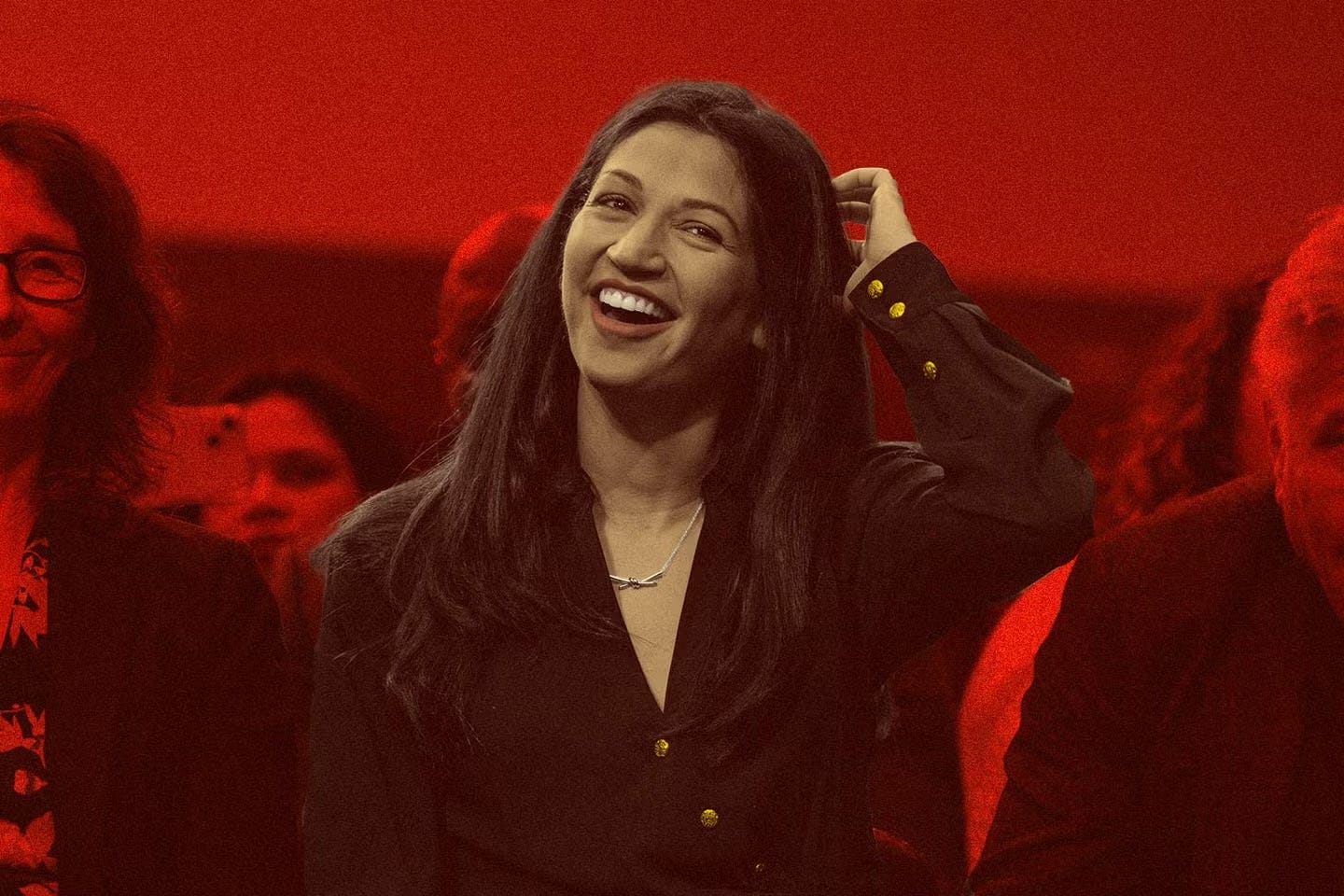
As President Trump and his allies attempt to broaden the political appeal of the MAGA movement among women, particularly white suburban voters, the effort has increasingly relied on lifestyle branding and cultural re-packaging rather than policy change. Recent reporting on Katie Miller, the wife of White House Deputy Chief of Staff Stephen Miller, illustrates the limits of that strategy and the internal contradictions at its core.
The attempt to soften the image of an administration defined by hard-line governance through curated domestic aesthetics and media projects has failed to meaningfully shift women’s political alignment, because it asks voters to ignore policy realities in favor of a personality presentation tradeoff that many are unwilling to make.
The strategic problem Trump faces with women voters
Donald Trump’s electoral coalition has long depended on overwhelming support from men, particularly white men without college degrees. Women, by contrast, have been a persistent vulnerability. Even in elections Trump won, women, especially college-educated and suburban women, broke decisively against him.
The gender gap has only widened. According to post-2024 polling cited in multiple analyses, white women favored Trump by a narrow margin, while younger women moved sharply in the opposite direction. Among women under 30, the divide has become structural rather than cyclical.
This presents a strategic problem for MAGA leaders: policy positions on abortion, immigration, family separation, and reproductive healthcare have alienated large segments of the female electorate. Reversing that trend would require either substantive policy shifts or a reframing powerful enough to override them.
The current strategy has leaned heavily toward the latter.
The emergence of “soft power” MAGA branding
Rather than revisiting policy, the Trump ecosystem has invested in cultural and aesthetic rebranding, particularly through women positioned as lifestyle figures rather than political actors. Podcasts, wellness messaging, domestic imagery, and maternal rhetoric have become central tools.
Katie Miller’s podcast and public persona sit squarely within this effort.
As reported in Slate and summarized by Raw Story, Miller has positioned herself as a model for conservative womanhood: a working mother, a health-conscious parent, and a calm domestic presence amid political chaos .
The message is not explicitly ideological. It is affective. The administration, the implication goes, cannot be as harsh or destabilizing as critics claim if its leaders are raising families, chatting casually, and presenting themselves as relatable.
This is not accidental. It is strategic.
Who Katie Miller actually is, according to the reporting
The reporting does not accuse Katie Miller of misconduct. It does not allege criminal behavior. What it does is complicate the image being sold.
According to Slate, Miller’s current public persona represents a significant rebrand from her earlier career. Before becoming a podcast host and lifestyle figure, she served as a spokesperson for the Department of Homeland Security during the implementation of family separation policies, policies she later acknowledged did not soften her views even after visiting the southern border .
She later worked for Vice President Mike Pence, sided with Trump during the post-January 6 fallout, and most recently worked within Elon Musk’s Department of Government Efficiency initiative. These are not peripheral roles. They place her directly inside the machinery of hard-line governance.
The reporting further details her early political ambitions during her time at the University of Florida, where classmates describe her as intensely driven, combative, and power-oriented within student government, characteristics that contrast sharply with her current emphasis on softness and retreat from ambition .
None of this is scandalous in the tabloid sense. But it matters politically.
Why the rebrand is struggling to land
The problem for MAGA’s outreach to women is not that figures like Katie Miller are inauthentic. It is that presentation cannot substitute for policy outcomes.
Women voters are not rejecting Trump because they misunderstand his tone. They are reacting to:
abortion restrictions and enforcement uncertainty
healthcare access
family economic pressure
immigration enforcement that separates parents and children
instability in governance
A podcast that avoids substance and focuses on lifestyle trivia does not address those concerns. In fact, as Slate notes, its deliberate avoidance of policy discussion may signal an implicit acknowledgment that policy is the liability.
The result is a messaging effort that asks women to emotionally disassociate governance from lived consequence.
Many are unwilling to do so.
The contradiction at the heart of the “trad-wife” appeal
There is also a deeper contradiction in the model being advanced.
Katie Miller is not a stay-at-home traditionalist. She has built a career inside government and media. She exercises power through proximity to power. Her life reflects ambition, access, and institutional influence.
Yet the message she now promotes emphasizes retreat from ambition, domestic centrality, and submission to family roles.
For many women, particularly younger ones, this contradiction is not aspirational. It reads as strategic repositioning, not personal conviction.
That perception matters because trust, not aesthetics, is the currency of persuasion.
Why this matters politically, not culturally
This is not a story about hypocrisy or personal reinvention. It is a story about political miscalculation.
The MAGA movement appears to believe that women’s resistance to Trump can be softened through cultural reassurance rather than addressed through governance change. That belief misunderstands the nature of the opposition.
Polling consistently shows that women’s political preferences are driven by material and bodily autonomy concerns, not by branding discomfort. No amount of domestic imagery offsets the fear of losing reproductive control or healthcare access.
In that context, the Katie Miller project is not a bridge. It is a detour.
The broader lesson for the Trump coalition
The attempt to reframe MAGA for women highlights a larger problem within the movement: a tendency to treat persuasion as aesthetic rather than substantive.
That approach has worked in certain media ecosystems. It has not worked electorally at scale.
Women are not disengaged from politics. They are often more engaged than men. What they are rejecting is not harshness per se, but unpredictability, exclusion, and policies that directly constrain their lives.
Until that reality is addressed, no amount of curated softness will close the gap.
Bottom line
The effort to recast MAGA’s relationship with women through figures like Katie Miller is revealing not because of who she is, but because of what the strategy assumes.
It assumes that presentation can outweigh policy.
It assumes that domestic imagery can neutralize hard governance.
It assumes that women’s political judgment is primarily emotional rather than experiential.
The evidence suggests otherwise.
And that is why, despite the resources invested in rebranding, the project is failing to deliver the result Trump needs most: durable support from women voters.
Great article, Brian - dead on.
This approach is so consistent with Trump and the MAGA overall treatment of women. It is demeaning and assumes that women can be patted on the head and will shut up and go away if they are told "oh honey - you are overreacting - everything will be fine. I mean look how good you have it."
It worked before, so they're going back to it. "Separate Spheres, "True Womanhood," and the Cult of Domesticity all demonstrate how it is the women themselves who influence and create these self-checks and balances.