
What Susie Wiles Actually Said and Why It Matters
By Brian Allen

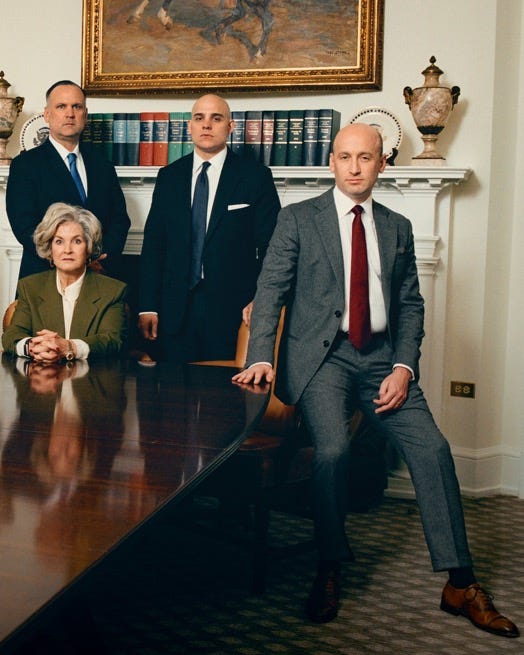
A new account from Vanity Fair author Chris Whipple is drawing sustained attention for its portrait of President Trump as relayed through extensive conversations with Susie Wiles, his chief of staff. The claims are striking. They are also secondhand, which makes careful framing essential.
What follows is not an endorsement of every allegation, nor an exercise in amplification. It is a disciplined assessment of what Whipple reports Wiles said, what can be verified, and why these remarks matter if accurately conveyed.
The source and its limits
All of the statements below come through Chris Whipple, reporting on private, repeated conversations with Wiles for Vanity Fair during the first year of Trump’s second administration. Wiles has not publicly confirmed or denied the remarks in full. The White House has not issued a detailed rebuttal.
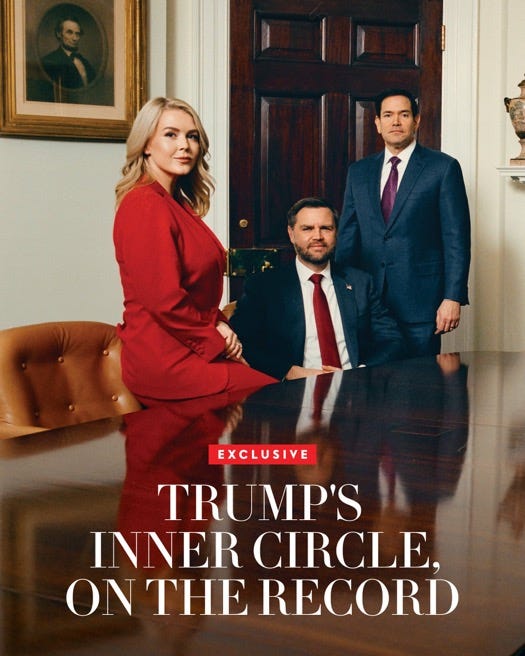
That distinction matters. These are reported characterizations, not sworn testimony or primary documents. But they are also not casual leaks or anonymous briefings. They are presented as an on-the-record insider account, offered deliberately for publication.
That elevates their significance while still requiring scrutiny.
Epstein documents and Trump
According to Whipple, Wiles said she had reviewed Epstein-related materials and acknowledged that Trump’s name appears in them. Whipple does not report that Wiles alleged criminal conduct, nor that the documents establish wrongdoing.
The importance here is narrow but real. It directly contradicts repeated public claims that Trump has no presence at all in Epstein-related records. Presence is not guilt. But denial versus acknowledgment is a material distinction, especially when it comes from the chief of staff.
Wiles also reportedly criticized Attorney General Pam Bondi’s handling of the Epstein files, saying the administration fueled confusion by implying the existence of a “client list” that does not, in fact, exist. That critique aligns with longstanding reporting from journalists and legal experts who have consistently stated that no verified client list has ever been produced.
This is not scandal. It is an admission of internal mismanagement of public narrative.
January 6 and retribution
Whipple reports that Wiles urged Trump not to pardon the most violent January 6 defendants. He ignored her advice.
More consequentially, she reportedly described Trump as motivated by retribution, saying that when an opportunity presents itself, “he will go for it,” and that attempts to curb “score-settling” failed because the impulse never stopped.
If accurate, this is not a personality critique. It is a governing insight. It suggests that retaliation is not situational or reactive, but structural in Trump’s decision-making.
Bill Clinton and Epstein
One of the most concrete contradictions involves Bill Clinton. Whipple reports Wiles explicitly said there is no evidence Clinton ever visited Epstein’s private island.
This matters because Trump and his allies have repeatedly implied otherwise. Unlike many of the other claims, this one is factual and testable. To date, publicly available flight logs, sworn testimony, and investigative reporting support Wiles’s reported position, not Trump’s rhetoric.
The implication is clear: the White House knows when certain claims are false, even when they are politically useful.
Psychological characterization and what it is not
Wiles reportedly described Trump as having “an alcoholic’s personality,” a non-clinical phrase she tied to her own upbringing with an alcoholic parent.
This is not a diagnosis and should not be treated as one. Its relevance lies solely in how senior aides internally conceptualize Trump’s volatility, impulse control, and cyclical behavior patterns. It is insight into management strategy, not medical judgment.
JD Vance, Elon Musk, and internal assessments
Whipple reports that Wiles characterized:
Vice President JD Vance as a long-time conspiracy theorist whose conversion to Trump was politically motivated rather than principled
Elon Musk as an “avowed ketamine user,” erratic, and often irrational
Budget Director Russell T. Vought as a “right-wing absolute zealot”
These are not policy declarations. They are internal risk assessments. Chiefs of staff exist to identify and manage risk. What is notable is not the bluntness of the language, but that it is allegedly applied to some of the administration’s most powerful figures.
Immigration, tariffs, and execution failures
Wiles reportedly defended USAID’s effectiveness, urged greater care in deportations to avoid wrongful removals, and acknowledged deep internal disagreement over tariffs, including failed efforts to delay them.
Notably, she reportedly cited specific cases in which mothers and children were deported after voluntarily attending routine immigration check-ins, saying she could not understand how such mistakes were made.
If accurate, these comments indicate internal awareness of policy execution failures, even when those failures continue unchecked.
The governing mindset
Whipple reports that Wiles ultimately summarized Trump’s worldview this way: he believes there is nothing he cannot do.
That framing aligns with years of public statements, court arguments, and executive actions. What is new is the claim that this belief is openly acknowledged internally as a defining feature of governance rather than dismissed as rhetoric.
Bottom line
If Chris Whipple’s reporting is accurate, Susie Wiles did not describe an administration constrained by law, norms, or process. She described one driven by impulse, grievance, and a belief in unlimited authority, with internal resistance that repeatedly failed.