
At Least 16 Epstein Files Vanished From the DOJ Website Within 24 Hours
A Full Investigation Into What Was Removed, Why It Matters, and What the Public Still Has Not Been Shown

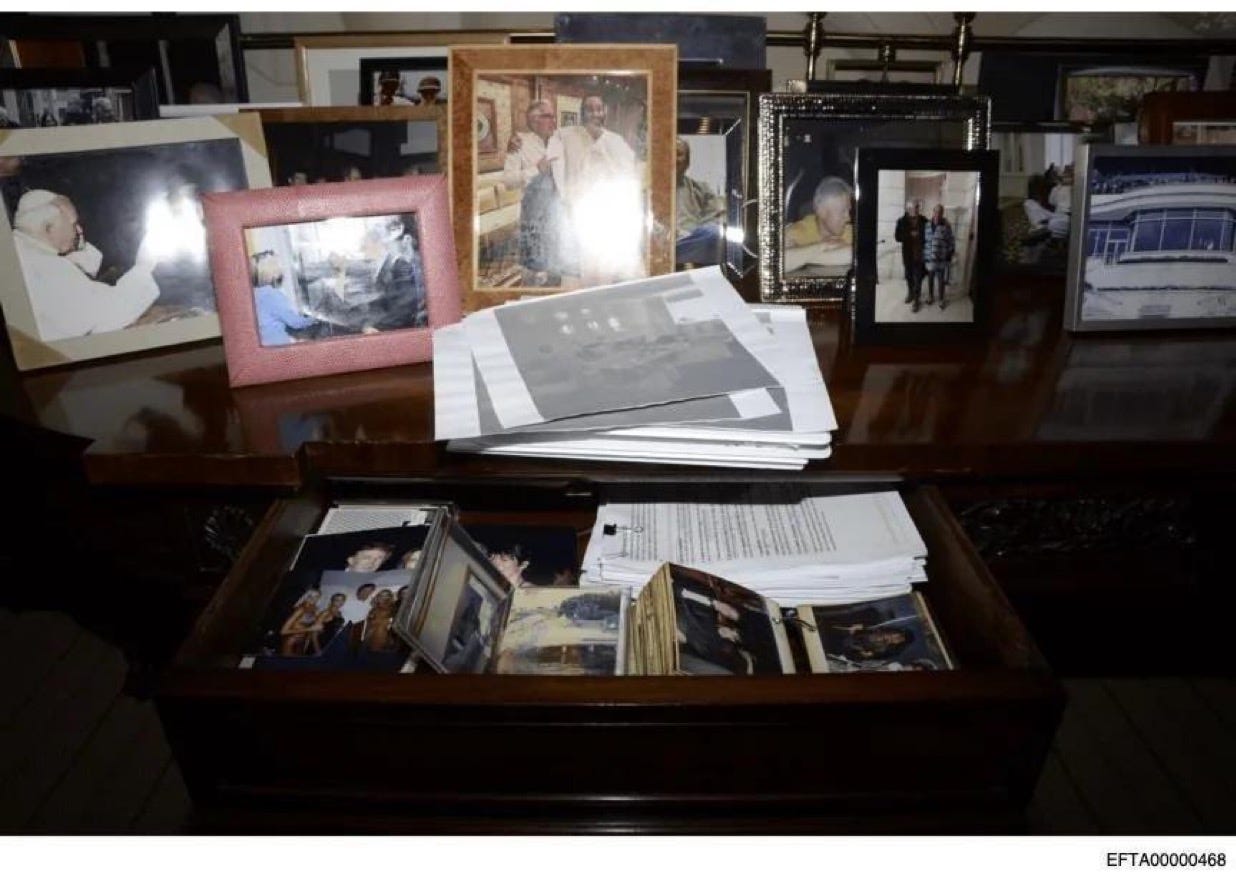
Less than a day after the Department of Justice released long-awaited records related to Jeffrey Epstein, at least 16 files quietly disappeared from the DOJ’s public website.
There was no press release.
No public notice.
No explanation.
By Saturday morning, files that had been live and accessible on Friday were gone, including material that reportedly contained a photograph of Donald Trump alongside Epstein and Ghislaine Maxwell, as well as other visual records tied to Epstein’s properties.
The Department of Justice has not said why the files were removed, who ordered the removal, or whether the materials will be restored.
This investigation examines what vanished, what remains withheld, and why the Epstein file release is increasingly being described not as transparency, but as controlled disclosure.
What Was Released And Then Removed
On Friday, the DOJ posted tens of thousands of pages of Epstein-related materials pursuant to a disclosure requirement passed by Congress. According to reporting by Associated Press, journalists and researchers accessed the files immediately, documenting their contents.
Within 24 hours, at least 16 of those files were no longer available.
The removed materials included:
Photographs from Epstein’s residences
Visual evidence tied to Epstein’s travel and social network
A photograph showing Trump, Melania Trump, Epstein, and Maxwell together
By the time reporters returned to retrieve the documents, the links led to error pages.
The DOJ declined to explain the removals when contacted by the AP.
The Legal Context: This Was Not a Voluntary Release
Congress did not request these records as a courtesy.
It mandated their disclosure.
Lawmakers passed the requirement after years of criticism that federal prosecutors:
Shielded Epstein through a controversial 2008 non-prosecution agreement
Failed to pursue co-conspirators aggressively
Withheld records that could explain why trafficking allegations were minimized for decades
The intent was simple: the public deserved to see how Epstein avoided accountability for so long.
Yet what the public received was partial.
The Redactions Problem: Transparency in Name Only
Even among the files that remain posted, the redactions are extensive.
According to the AP:
A 119-page grand jury document is fully blacked out
FBI interviews with survivors are missing or heavily obscured
Internal DOJ memoranda explaining charging decisions remain undisclosed
One Epstein survivor told the AP:
“I feel like again the DOJ, the justice system is failing us.”
That reaction is not ideological. It is procedural.
Transparency that excludes the most consequential evidence is not transparency.
Congressional Response: Oversight Without Answers
Members of Congress took note of the removals almost immediately.
House Oversight Democrats publicly questioned why files were pulled without notice, asking:
“What else is being covered up? We need transparency for the American public.”
As of this writing:
The DOJ has issued no clarification
No inventory of removed files has been published
No timeline for restoration has been provided
Silence has become the department’s only response.
What This Investigation Does and Does Not Claim
This investigation does not assert:
That the file removals prove a criminal conspiracy
That any individual committed new wrongdoing
That motive has been established
What it does establish is far more basic and far more troubling:
Public records were released
Those records were then removed
The government has refused to explain why
In a case defined by secrecy, delay, and institutional failure, that pattern matters.
Why This Moment Is Different
For years, Epstein survivors were told that accountability was impossible because Epstein was dead.
That excuse no longer applies.
The question now is not whether justice can be pursued, but whether the full historical record will ever be allowed to exist in public.
Records that appear briefly and vanish quietly undermine confidence in every future disclosure.
The Bottom Line
The Epstein files were supposed to close a chapter.
Instead, the unexplained disappearance of documents within 24 hours has reopened the central question that has haunted this case for years:
Who decides what the public is allowed to know and why?
Until the Department of Justice explains what was removed and on whose authority, transparency remains incomplete.
If you want independent investigations that do not disappear when they become inconvenient:
Subscribe to The Allen Analysis to support continued reporting
Share this investigation to keep pressure on public officials
Follow for updates as we track whether the missing files are restored, or quietly forgotten
Independent journalism only works if readers demand answers.
https://mdavis19881.substack.com/p/epstein-23-what-comes-next
I do not understand in the least, why the entire set of files is not considered one entity and simply made public.
I have read countless speculations, as to why it may be such a "hush hush" topic, and that so-and-so might be involved or implicated, and perhaps some of those people are still in, or have been in power.
I'll refrain from naming specific countries, or specific individuals, and I truly look forward to reading what other readers have to say on this topic. This is my first comment on this system, and I hope that it is received well, and also that it is appreciated. Perhaps I will contribute more in the future, and I want to make it clear that I have no stake in this myself whatsoever. I am a retired Principle Computer Software Engineer and "tinkerer/inventor" that prefers to distance myself from politics, but calls into radio shows on rare occasions, mostly in the Boston, Massachusetts area.
Happy Holidays to all, wherever you may be, John Miskinis