
Chief Justice John Roberts Just Gagged Immigration Judges. Here Is Why It Matters More Than Anyone Is Admitting
By Brian Allen

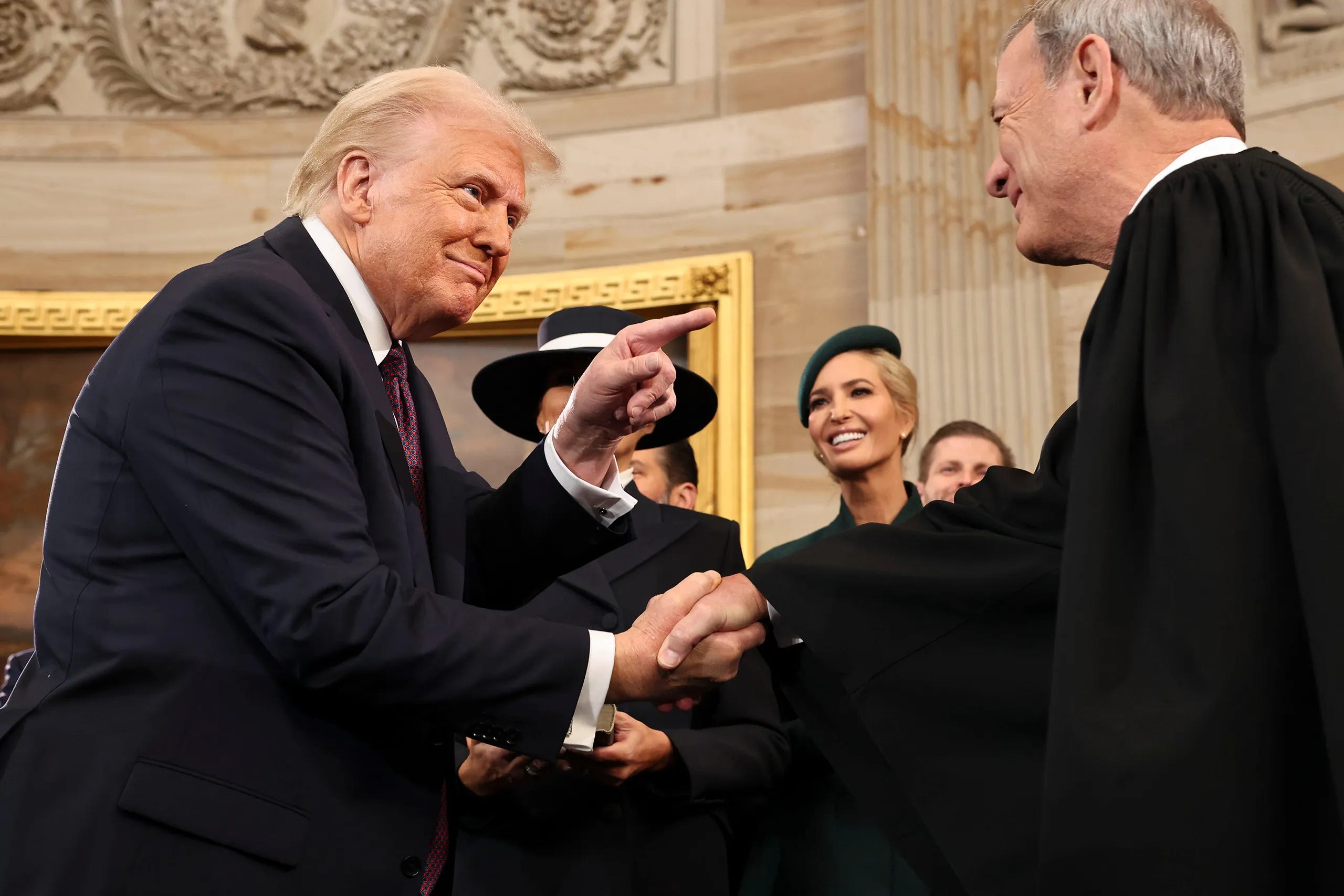
Chief Justice John Roberts just did something that should chill every American who cares about government transparency. With a quiet, unsigned order on Friday afternoon, Roberts froze a federal ruling that would have allowed immigration judges to speak publicly without getting political permission first. It is a procedural move on paper. In reality, it is a muzzle tightening around the people who understand the nation’s most secretive courtroom pipeline.
The Newsweek report spells it out plainly. The Supreme Court intervened to temporarily block a Fourth Circuit ruling that revived a lawsuit challenging a federal gag policy imposed on immigration judges. As the article explains, “The policy requires immigration judges to obtain permission before making any official speeches.”
That policy has been controversial for years because immigration judges operate within one of the least transparent adjudication systems in the country. They deal with asylum cases, deportation orders, credible fear interviews, and life-altering decisions that rarely see the light of day. So when Roberts steps in to keep a gag order alive, it is a tectonic moment with nationwide implications.
The government claims this is about ethics. They argue that judges need approval to avoid any “appearance of bias.” As the filing put it, “Immigration judges are subject to broad ethical restrictions to avoid the appearance of bias and to preserve an image of impartiality.” But that language tells you exactly what the fight is really about. This is a struggle between public transparency and political control.
The National Association of Immigration Judges says the policy is unconstitutional. Their argument is simple. You cannot force judges to get government approval before talking about the system they work in. That is not ethics. That is silencing. Ramya Krishnan of the Knight First Amendment Institute, who represents the judges, told Newsweek, “There is no compelling reason to further delay resolution of the question whether immigration judges can raise their First Amendment claims directly in federal court.”
She is right. And Roberts stepping in now should raise eyebrows everywhere.
The Supreme Court’s conservative majority has been reshaping immigration authority for the last three years. Emergency stays have become a political tool, handed out to freeze decisions that inconvenience federal power. As Newsweek notes, the Court has issued “several emergency stays related to major immigration policies this past year.” Three of the justices delivering these interventions were appointed by Donald Trump. Roberts himself has increasingly positioned the Court as a referee of immigration policy rather than a neutral arbiter.
So the question becomes unavoidable. Why this case? Why now. Why silence the judges whose insight could challenge the administration’s narrative of control?
One line in the government’s filing stands out. They warned the Court that the Fourth Circuit’s ruling was “so evidently contrary to this Court’s precedents that it calls for summary reversal.” That is not a cautious legal argument. That is a demand to shut the door before the public learns what is happening inside the immigration system.
The procedural fight is technical. The stakes are not. Immigration courts are overwhelmed. Dockets are years long. Asylum backlogs have broken historical records. Judges face crushing caseloads while receiving constant political pressure from successive administrations. If these judges are silenced, the public loses one of the only internal warning systems inside the machine that processes millions of human lives.
And the timing matters. The ruling Roberts froze was set to take effect on December 10. The government rushed to the Court just hours before that deadline. This was urgency driven by politics. Not law. The administration knows that if judges gain the freedom to speak without fear of retaliation, the country will hear what is actually happening in these courtrooms. The backlogs. The pressure. The shortcuts. The stakes.
Which is exactly why the gag order exists.
The next phase will tell us everything. Roberts ordered responses by December 10. The full Court may choose to intervene more aggressively. If they overturn the Fourth Circuit and keep the gag policy intact, it would cement a precedent that federal agencies can silence judges whenever transparency becomes inconvenient.
And that precedent would not stay in the immigration system. It would bleed into every administrative court in the country.
This case is not about speeches. It is about who controls the truth.
If you value journalism that exposes the power plays happening behind the scenes, become a paid subscriber.
The more they tighten the silence, the more necessary it becomes for us to break it.
Paid members keep this work independent, fearless, and unfiltered.
Upgrade and support The Allen Analysis today.
References
Newsweek. (2024). Chief Justice John Roberts halts court ruling in immigration judges’ speech limits case. Retrieved fromhttps://www.newsweek.com/john-roberts-court-immigration-judges-speech-halt-11165845
Knight First Amendment Institute. (2024). Statements regarding immigration judge speech restrictions referenced in Newsweek report.
United States Supreme Court. (2024). Emergency stay order filed December 2024 referenced in Newsweek report.
WHAT TO READ:
America’s Breaking Point: The Bankruptcy Wave That Washington Pretends Not To See

The numbers are no longer blinking warning lights. They are sirens. And if you listen closely, you can hear them over everything else happening in Washington. While political elites fight each other on television, regular Americans are quietly drowning.
Maxwell Wants Out. Survivors Say “Absolutely Not.” And The Epstein Files Are About to Drop.

The timing could not be more revealing.
Jasmine Crockett Didn’t Lose a Race. The Supreme Court Moved the District.

When voters in Dallas sent Jasmine Crockett to Congress, they did not just elect a Democrat.