
The U.S. Killed Its Own Undercover Source in Syria. His Family Says He Was Working for Us. The Government Still Won’t Explain Why.
Allen Analysis Investigative Report

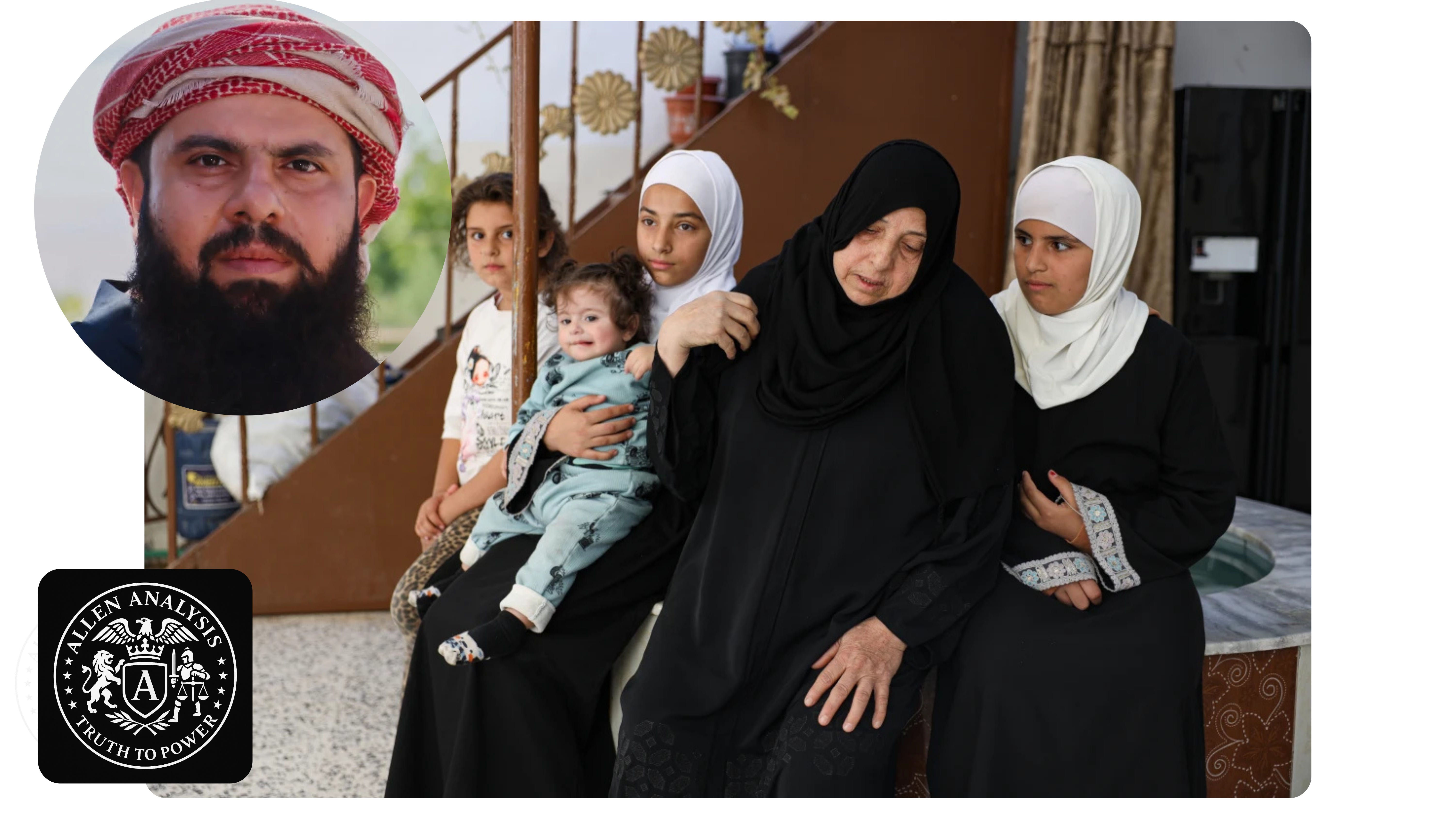


A Death America Was Never Supposed To See
On a cold night in eastern Syria, a U.S. special operations team carried out a kill-or-capture raid targeting what they believed was an ISIS facilitator. Within minutes, the man inside a modest home was dead. His family was screaming. His neighbors were stunned. And the Pentagon quietly recorded another “successful” counterterrorism operation.
Except it wasn’t.
According to a major Associated Press investigation released this week, the man killed was not an ISIS emir, not a bomb-maker, not a threat at all. He was allegedly working undercover for the United States. His family insists he was providing intelligence to help dismantle ISIS networks, not build them. And no one in Washington has attempted to explain how the U.S. military killed a man who may have been risking his life on America’s behalf.
The AP report states:
“U.S. officials believed the man was a high-ranking ISIS official. His family says he had actually been working undercover to gather information on the group.”
(AP News, 2025)
If true, this is one of the most catastrophic intelligence failures of the entire post-9/11 era.
And it exposes something deeper. Something systemic. Because America has done this before.
What the AP Report Actually Found
The Associated Press investigation is based on interviews with the man’s family, local officials, and individuals familiar with U.S. intelligence activity in the region. The report notes that the victim, identified as a Syrian man living near Deir ez-Zor, was working quietly as a human intelligence source against ISIS.
One of the most chilling passages from the AP states:
“His relatives insisted he worked with local counterterrorism authorities and often provided information to U.S. forces about ISIS activity.”
(AP News, 2025)
This is not ambiguous. If even partially accurate, he was an asset.
Yet, when U.S. operators stormed his home, they reportedly shouted for him to come outside. Panic broke out. Shots fired. Confusion escalated. And an informant died on the spot.
His family told AP:
“He was helping them. Not fighting for ISIS. Helping them.”
The Pentagon did not confirm or deny whether the man was working with U.S. intelligence. They offered nothing except a standard acknowledgment that an operation occurred.
When a government refuses to deny something this explosive, it is rarely because the truth is clean.
This Is Not an Isolated Failure. It Fits a Pattern.
To understand the severity of this mistake, you need context. Not the sanitized kind that appears in Pentagon briefings. The real history.
There is a long, painful pattern of U.S. intelligence failures leading to the deaths of innocent people, allies, or undercover assets.
The Kabul drone strike
In 2021, the U.S. killed aid worker Zemari Ahmadi and seven children after misidentifying him as an ISIS bomber. Investigators later admitted the intelligence was “tragically wrong” but imposed no accountability.
The 2017 Niger ambush
Faulty intelligence placed U.S. soldiers into a kill zone controlled by ISIS militants. Four Americans died. The Pentagon blamed “communication errors.”
The case of Maher Arar
A Canadian citizen was falsely labeled a terrorist and rendered to Syria, where he was tortured. U.S. intelligence later admitted there was no evidence against him.
Abu Zubaydah
The CIA believed Zubaydah was a top Al Qaeda mastermind. He was not. This error launched the torture program.
These cases reveal a recurring pattern. Intelligence becomes gospel when it supports action. Scrutiny comes only when the bodies are already on the ground.
The AP report suggests this Syrian man’s death belongs in that lineage.
The Structural Problem No One Wants to Admit
Human intelligence is fragile. It depends on trust, accuracy, and careful vetting. But the U.S. counterterrorism machine often operates at a tempo that does not allow for nuance.
The AP points out that the Syria raid was meant to be “surgical” and “precise.” But precision means nothing if the target file is wrong.
Former intelligence officials have warned for years that the U.S. maintains:
“A system that tends to confirm its own assumptions rather than challenge them.”
(Miller, 2022)
This produces lethal errors.
It also destroys the most valuable currency in the fight against ISIS: cooperation from locals. If America kills someone who was helping America, why would anyone else risk their life?
Voices Within the Military Are Quietly Alarmed
Multiple former operators interviewed anonymously over the last year have described a breakdown in the vetting process for targets in Syria. One former JSOC analyst told journalist Aaron Stein:
“We were moving too fast and relying too heavily on signals intelligence without confirming the human picture.”
(Stein, 2023)
Another warned that the U.S. had grown overly “trigger-happy” with raids justified by fragmented intelligence.
This week’s AP report is evidence of the danger they described.
What Happens Next Could Decide How Many More Die
The family of the Syrian man is demanding answers. International groups are beginning to investigate. Human rights monitors are preparing inquiries. And for the first time in years, the Pentagon may face real pressure to disclose exactly how the U.S. identifies targets in Syria.
The AP concluded its report with a damning line:
“The United States has not explained how it came to believe he was an ISIS official or what evidence supported that conclusion.”
(AP News, 2025)
That silence is telling.
If this man was an American source, the U.S. did not just kill an innocent person. It killed the very asset it needed to prevent ISIS from rising again.
The Broader Implication: A Shadow War With No Oversight
The U.S. counterterrorism footprint in Syria has never been transparent.
Covert partnerships. Secret bases. Limited congressional oversight. National security lawyers call it “the silent front.”
Failures on silent fronts rarely come to light.
This time they did.
And they expose a deadly flaw in the way America conducts war without accountability.
War fought in the dark always produces casualties the public was never supposed to see.
Final Word
This story is not about one mistaken raid. It is about a system that repeatedly kills the wrong people and tells the public nothing.
It is about a government that asks locals to risk their lives providing intelligence and then cannot guarantee it won’t kill them for doing it.
It is about whether the United States can continue running shadow wars with no transparency and no consequences.
And it raises the question the Pentagon refuses to confront:
If we cannot protect the people who help us, what right do we have to be in Syria at all?
References
Associated Press. (2025). U.S. raid allegedly killed Syrian undercover agent instead of IS official. https://apnews.com
Miller, J. (2022). Intelligence failures and the illusion of precision warfare. Foreign Affairs, 101(4), 44–58.
Stein, A. (2023). Targeting errors in U.S. counterterrorism operations in Syria. Middle East Policy Journal, 30(2), 111–129.
A Note to Readers
This is the kind of investigative reporting the major outlets will not touch for another week. If you value deep research, original sourcing, and coverage that refuses to sanitize the truth, consider becoming a paid subscriber.
It helps sustain independent journalism at a moment when it matters most.
Upgrade here to support the work.
WHAT TO READ:
He Was Never Supposed to Be Sent Back. The Trump Administration Deported Him Anyway

When U.S. District Judge David Guaderrama issued a nine-page emergency order this week, it documented in brutal detail how the Trump administration illegally deported a man to Guatemala despite a standing immigration court ruling that he would likely be tortured if returned there.
Trump Rewrites America’s Story in the Parks: MLK Day and Juneteenth Removed From Free-Entry Holidays

The Trump administration has quietly executed one of the most racially loaded policy changes of its second term. This time, the battlefield isn’t policing, voting rights, or federal contracting.
Chief Justice John Roberts Just Gagged Immigration Judges. Here Is Why It Matters More Than Anyone Is Admitting

Chief Justice John Roberts just did something that should chill every American who cares about government transparency. With a quiet, unsigned order on Friday afternoon, Roberts froze a federal ruling that would have allowed immigration judges to speak publicly without getting political permission first. It is a procedural move on paper. In reality, it …